
Sumter County Criminal Court Records
A criminal court record is the case file maintained by the court after a prosecutor files formal charges or the matter otherwise opens in court. In Sumter County, Superior Court generally handles felony cases, and State Court handles criminal matters within its jurisdiction. Magistrate Court may handle warrant applications and first appearances, but it is usually not the final felony trial court. Municipal courts may handle city offenses and local ordinance cases.
The local criminal record should not be confused with the jail roster. The roster can show booking status, arrest date, arresting agency, bond, warrant number, charge description, misdemeanor/felony marker, and court. The full criminal court record may later show a different charge path, plea, dismissal, conviction, sentence, probation term, or record restriction. For a closer look at the arrest-to-charge path, use the Sumter County arrest records and court charges page.
The District Attorney page identifies the local prosecutor for the Southwestern Judicial Circuit.
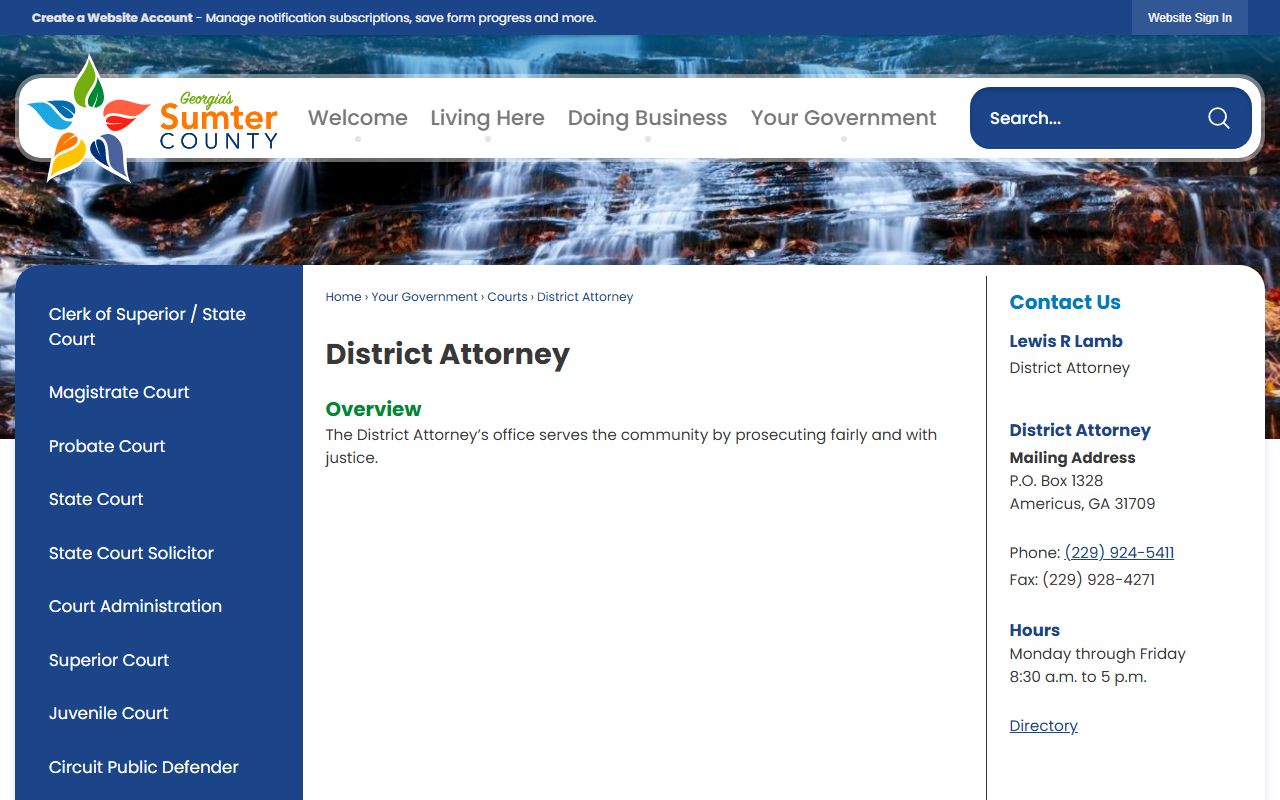
That office is important because felony charges and later restriction requests may involve the prosecutor, not only the clerk.
Search Sumter County Criminal Court Records
Start with the Clerk of Superior / State Court for Superior and State Court criminal files. The clerk's public page says the office maintains civil and criminal files for the Superior and State Courts of Sumter County. No official county-built public docket portal for those courts was located. Statewide tools can help, but they do not remove the need to confirm the court and custodian.
- Identify whether the matter was felony, misdemeanor, city offense, warrant, first appearance, or juvenile matter.
- Use the clerk for Superior or State Court criminal files and certified copy procedures.
- Use Magistrate Court for warrant applications and first-appearance-related records when those are the records sought.
- Check re:SearchGA or Georgia Courts e-access only after verifying whether Sumter County data is available through the account-based provider.
- Request a certified copy from the clerk if the criminal court record must be used for a legal filing or official proof.
The Circuit Public Defender page identifies the defense office for indigent defendants in Superior, Juvenile, and Sumter State Court cases.
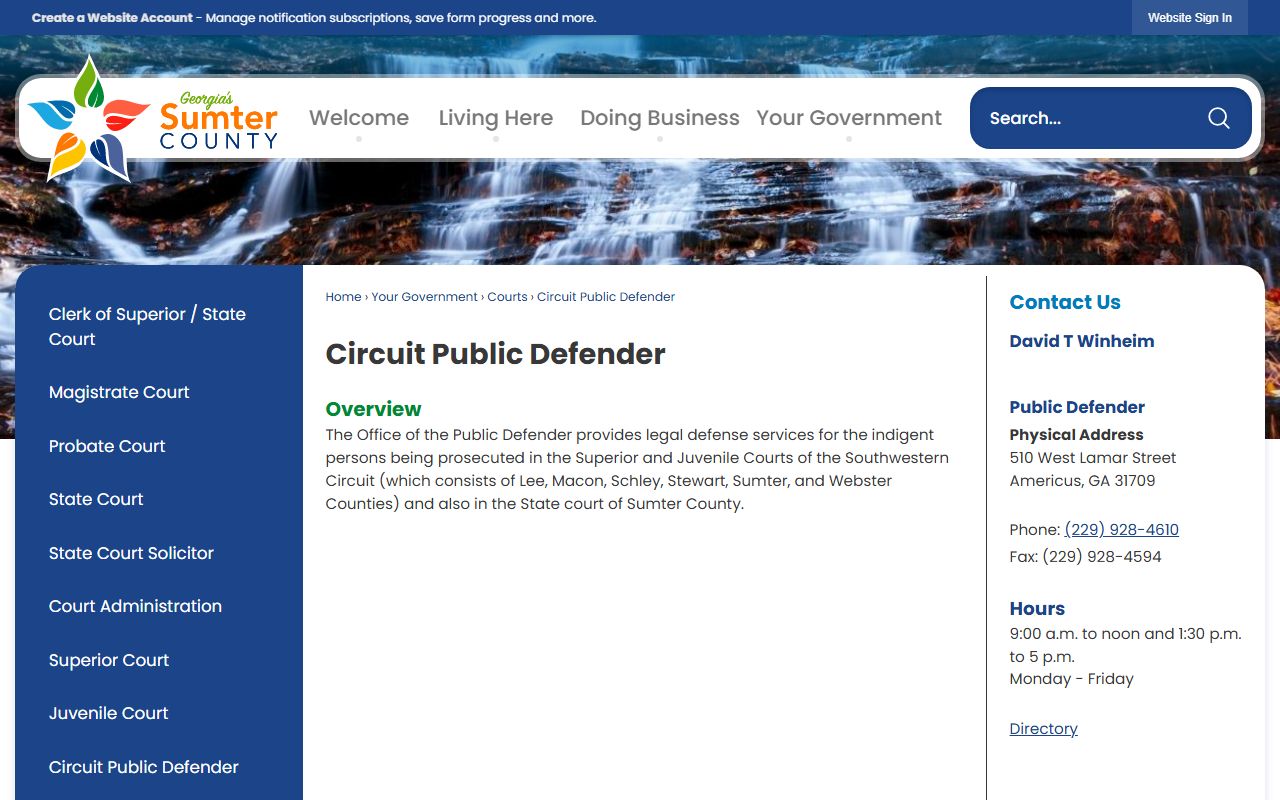
The public defender source helps separate court-record access from legal representation and case advice.
Sumter County Criminal Case Stages
A criminal case record changes as the case moves from charge filing to final outcome. The first public pointer may be the jail roster or a warrant matter. The court file begins to carry formal case events once charges are filed or presented in the proper court. Georgia law also requires arrested persons to be brought before a judicial officer within 72 hours under O.C.G.A. § 17-4-26.
Case flow: Charges Filed › Arraignment › Pretrial / Motions › Plea or Trial › Disposition › Sentencing
| Stage | What Happens |
|---|---|
| Charges filed | The prosecutor files an accusation, indictment, or other charging document, or the charge proceeds through the proper court path. |
| Arraignment | Charges are formally presented and the defendant enters a plea. |
| Pretrial / motions | Attorneys file motions, notices, discovery matters, and bond or scheduling requests. |
| Plea or trial | The case resolves by plea, trial verdict, dismissal, or other court action. |
| Sentencing | The court records jail, prison, probation, fines, restitution, or other terms after conviction. |
The public-facing State Court Solicitor page directs users to the District Attorney's office.
That routing is useful when misdemeanor prosecution questions need a local public-facing contact.
What Sumter County Criminal Records Show
Criminal court records may show the case number, court, filing date, defendant, prosecutor, defense attorney, judge, charges, bond, filings, warrants, pleas, orders, disposition, sentence, probation terms, financial obligations, and appeals. The official roster may show charge-level fields, but the court file is the source for the final disposition and certified court documents.
| Field | What It Shows |
|---|---|
| Case number | The court tracking number for the criminal case or related filing. |
| Defendant | The person charged in the criminal court case. |
| Charges | The statute, description, count, and severity as filed or later amended. |
| Plea | Guilty, not guilty, nolo contendere, or another formal plea entry. |
| Disposition | Dismissal, plea, verdict, conviction, acquittal, transfer, or other outcome. |
| Sentence | Jail, prison, probation, fines, restitution, or other court-ordered terms. |
Charges vs Convictions
A charge is an accusation. A conviction is an outcome after a guilty plea, verdict, or other court finding that supports judgment. Sumter County criminal court records can show charges that are later amended, reduced, dismissed, merged, or resolved differently. A person may have a booking entry and charge line without a final conviction for that charge.
| Point | Charge | Conviction |
|---|---|---|
| Stage | Accusation filed or listed | Final court outcome after plea or verdict |
| Record meaning | Shows what was alleged | Shows legal responsibility found by the court |
| Can change | May be amended, reduced, dropped, or dismissed | May be appealed, corrected, restricted, or affected by later orders |
Restricted Criminal Court Records
Georgia uses the term record restriction for many criminal-history access limits. O.C.G.A. § 35-3-37 governs restriction of certain criminal-history information from non-criminal-justice public access. GBI guidance says post-July 1, 2013 arrest restriction requests go to the prosecutor, while earlier arrests route through the arresting agency. A court file and a criminal-history record may need separate handling.
| Point | Sealed / Restricted | Expunged |
|---|---|---|
| Public visibility | Limited from public or non-criminal-justice access under law or order | Common term for removal, but Georgia criminal history practice often uses record restriction |
| Examples | Juvenile files, sealed matters, restricted criminal history, protected personal data | May not mean every court document is destroyed or unavailable to all agencies |
| Where to start | Clerk, prosecutor, arresting agency, or court depending on record type | Confirm the Georgia process before assuming an expungement remedy exists |
The GBI record restriction guidance is the key statewide reference for criminal-history restrictions.
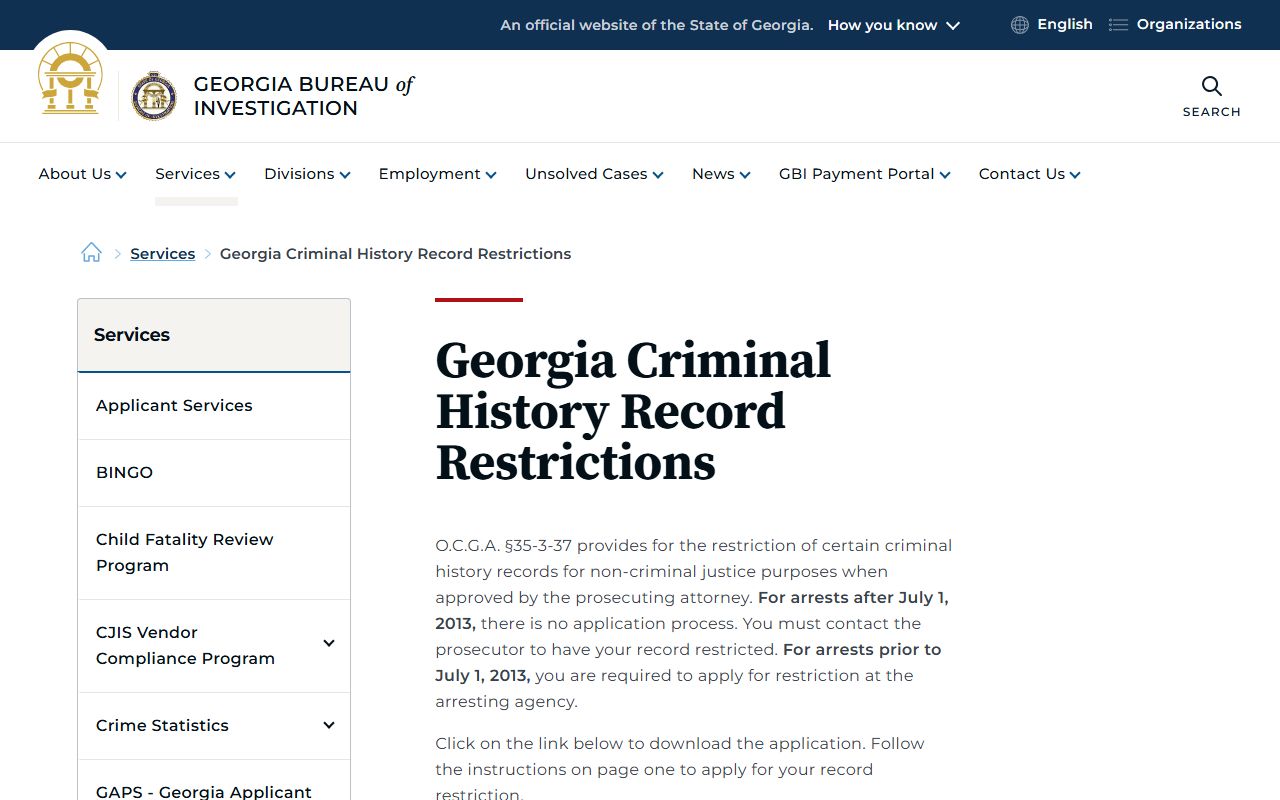
GBI guidance helps explain why a jail or criminal-history entry may follow a different access path than a court docket.
Public Access to Sumter Criminal Records
Adult criminal court records are often public, but they are still subject to court rules, redactions, sealed-record rules, juvenile statutes, and criminal-history restriction law. Georgia's Open Records Act applies to public agency records, while court-file copies are usually requested from the clerk. O.C.G.A. § 15-11-701 and O.C.G.A. § 15-11-704 control juvenile sealing and public inspection issues. Adoption files are sealed under O.C.G.A. § 19-8-23.
Public access can also be affected by an open investigation, protected personal identifiers, minor information, medical information, or a court order. Use the Clerk of Superior / State Court for file-copy status and certified copies. Use the prosecutor or arresting agency for record-restriction steps when GBI guidance points there. Use an attorney for advice about eligibility, court motions, or the effect of a prior case.
Important: Public criminal court records are not the same as FCRA-compliant employment, tenant, credit, or insurance background reports.
The GBI Sumter County release shows how investigative material can involve agencies outside the local court file.
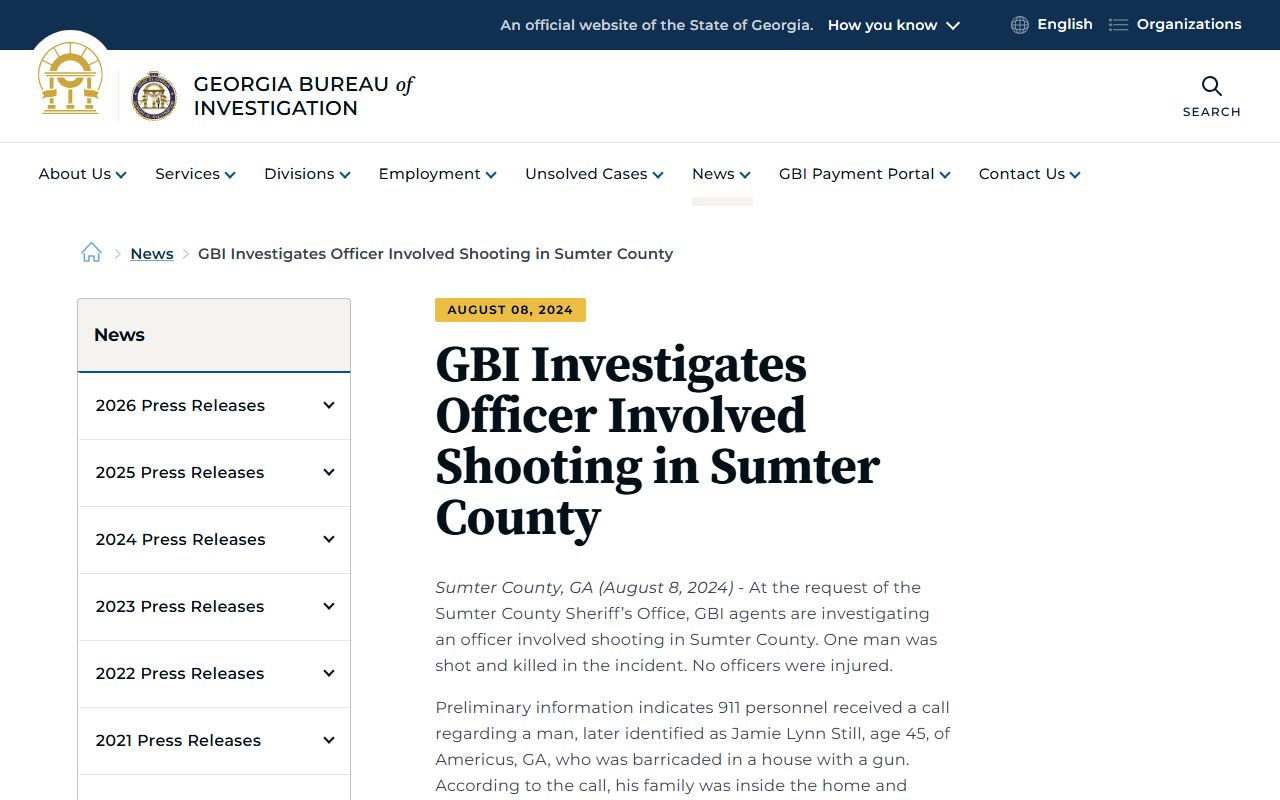
Agency investigations and later court records can be related, but they are not requested from the same custodian.